![[background image] image of office workspace with desks (for a film production company)](https://cdn.prod.website-files.com/68995c2cb63b535f9711d993/69842d170fd9460db7f1f890_ACF-Auckland-Climate-Festival_The36th_Design_Studio.jpg)
For the ACF - Auckland Climate Festival, we developed a comprehensive graphic system tailored for the marketing team. This system was designed to be used across social media and signage materials for events throughout Auckland. It incorporated Te Ao Māori symbolism, with approval from a local Iwi, ensuring the respectful use of sacred patterns and shapes. The festival's planning was uniquely aligned with the moon cycle, fostering a deeper connection to the land and waterways.
For the ACF - Auckland Climate Festival, we developed a comprehensive graphic system tailored for the marketing team. This system was designed to be used across social media and signage materials for events throughout Auckland. It incorporated Te Ao Māori symbolism, with approval from a local Iwi, ensuring the respectful use of sacred patterns and shapes. The festival's planning was uniquely aligned with the moon cycle, fostering a deeper connection to the land and waterways.
For the ACF - Auckland Climate Festival, we developed a comprehensive graphic system tailored for the marketing team. This system was designed to be used across social media and signage materials for events throughout Auckland. It incorporated Te Ao Māori symbolism, with approval from a local Iwi, ensuring the respectful use of sacred patterns and shapes. The festival's planning was uniquely aligned with the moon cycle, fostering a deeper connection to the land and waterways.
The 2023 Auckland Climate Festival was shaped around Wai (water) as its central theme, positioning it as both the starting point and connective force for climate awareness and action. Water was chosen not only because of its critical role in climate systems, but because it is an element New Zealanders—Kiwis and Māori in particular—are deeply connected to through geography, culture, and daily life. Surrounded by oceans, rivers, lakes, and rain, Aotearoa understands water not as a distant resource but as a living presence. In te ao Māori, wai is a taonga: life-giving, relational, and inseparable from wellbeing. The festival used this understanding to remind audiences that what we are most connected to is also what we are most responsible for protecting.
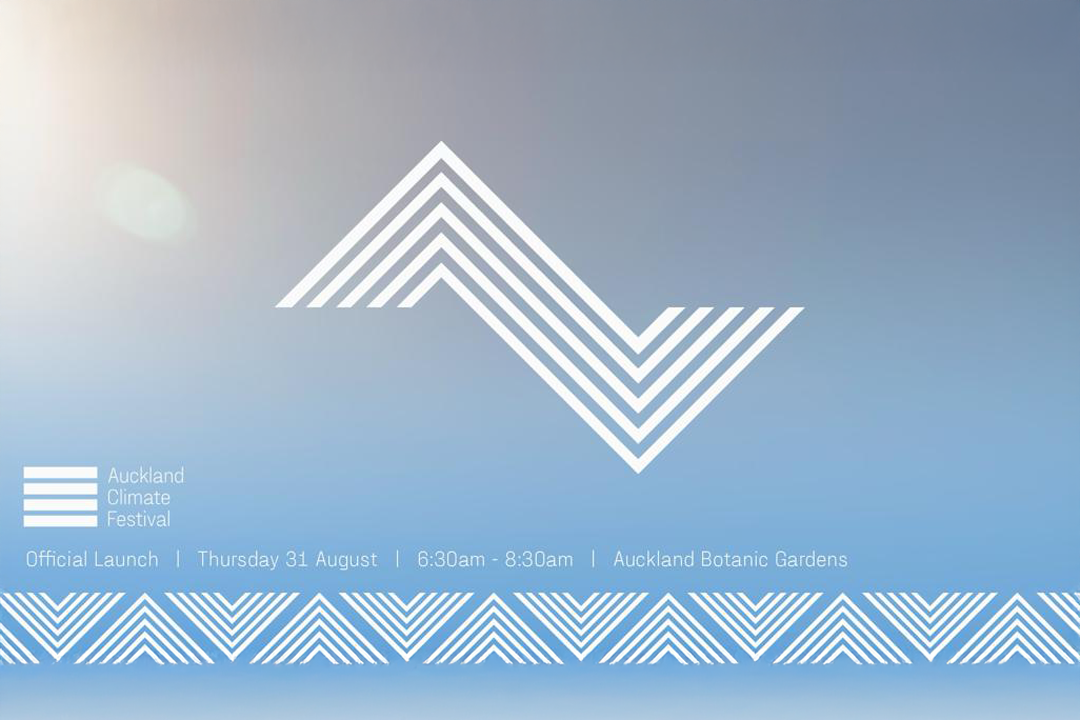
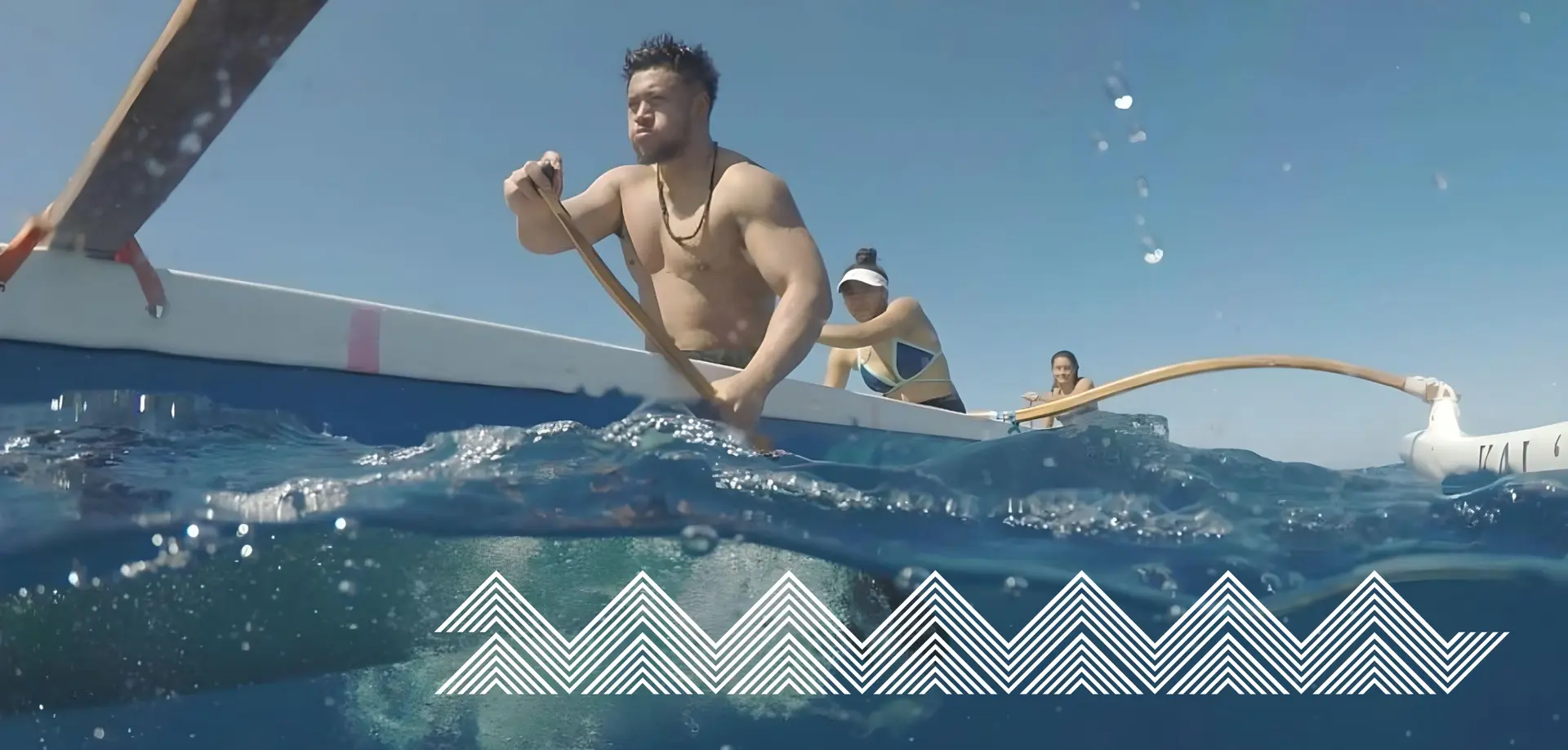
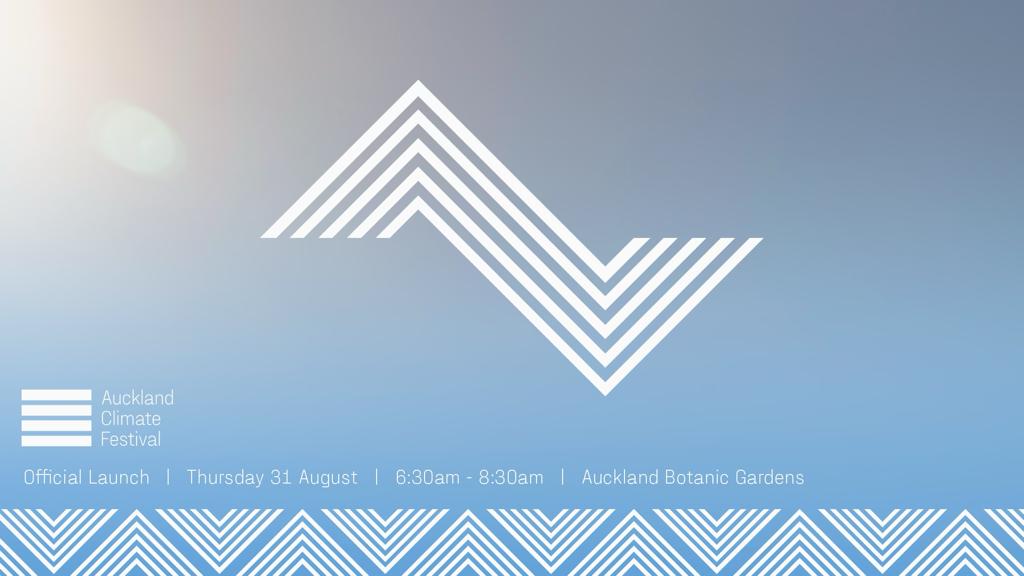
This conceptual foundation directly informed the festival’s graphic and visual identity. The design language drew from patterns, forms, and rhythms found in Te Ao Māori, not as decoration, but as a system of meaning and interconnectedness. These visual structures echo natural flows—currents, ripples, layers, and cycles—reflecting how water moves through land, ecosystems, and communities. The festival branding embraced this interconnected worldview, reinforcing the idea that climate action is not isolated or linear, but layered, collective, and continuous, much like wai itself.
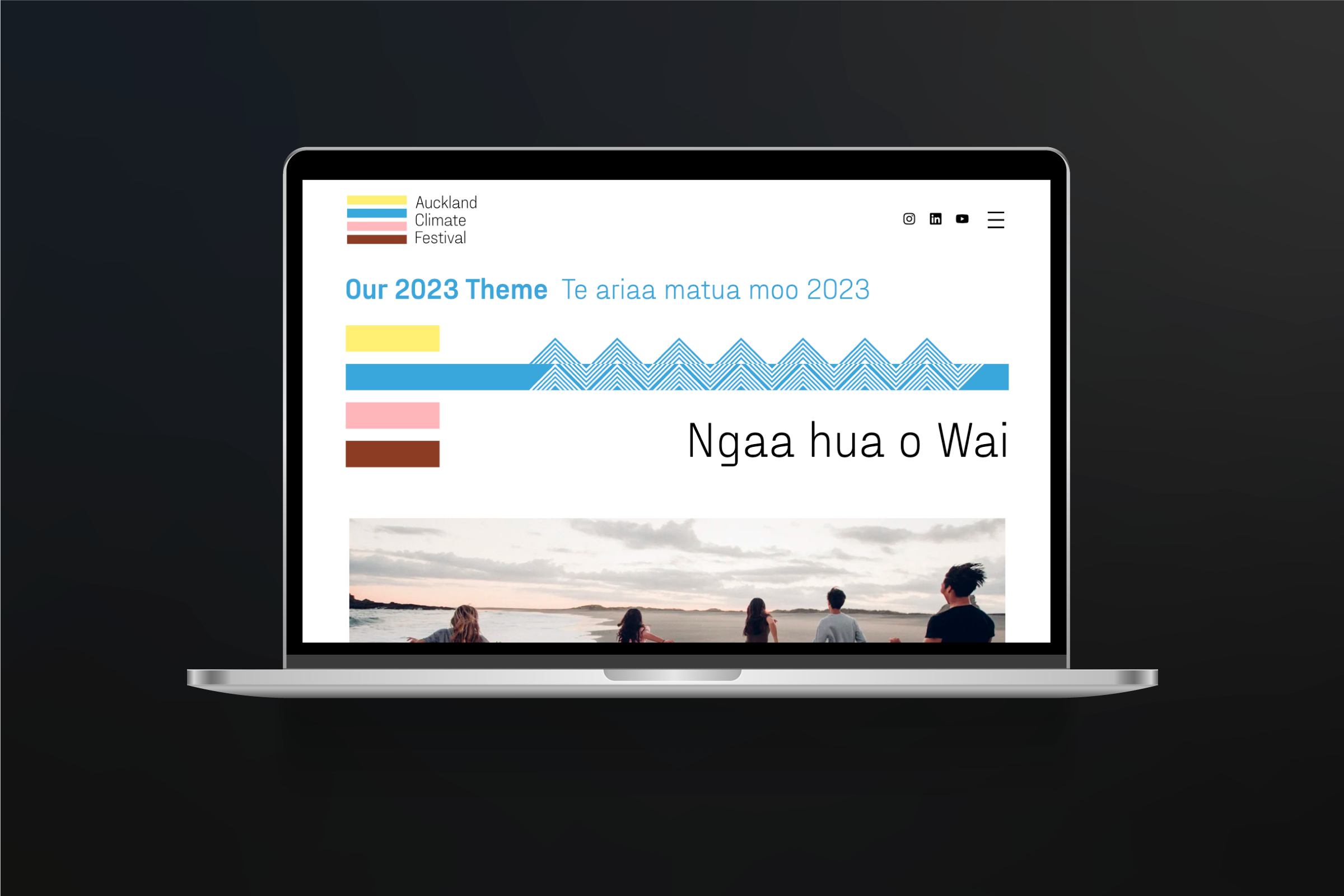
Within the branding system, colour stripes were used to represent different phases and dimensions of climate action, creating a clear yet flexible visual framework. Among them, the blue stripe emerged as the most prominent, acting as the visual and conceptual anchor to the water theme. This blue connection informed the development of graphic icons and patterns, which revolved around flow, continuity, and transformation. Together, these elements created a cohesive identity that translated the festival’s purpose into a visual language—one that made water not just a topic of discussion, but the lens through which climate action, responsibility, and collective care were understood.
The 2023 Auckland Climate Festival was shaped around Wai (water) as its central theme, positioning it as both the starting point and connective force for climate awareness and action. Water was chosen not only because of its critical role in climate systems, but because it is an element New Zealanders—Kiwis and Māori in particular—are deeply connected to through geography, culture, and daily life. Surrounded by oceans, rivers, lakes, and rain, Aotearoa understands water not as a distant resource but as a living presence. In te ao Māori, wai is a taonga: life-giving, relational, and inseparable from wellbeing. The festival used this understanding to remind audiences that what we are most connected to is also what we are most responsible for protecting.
This conceptual foundation directly informed the festival’s graphic and visual identity. The design language drew from patterns, forms, and rhythms found in Te Ao Māori, not as decoration, but as a system of meaning and interconnectedness. These visual structures echo natural flows—currents, ripples, layers, and cycles—reflecting how water moves through land, ecosystems, and communities. The festival branding embraced this interconnected worldview, reinforcing the idea that climate action is not isolated or linear, but layered, collective, and continuous, much like wai itself.
Within the branding system, colour stripes were used to represent different phases and dimensions of climate action, creating a clear yet flexible visual framework. Among them, the blue stripe emerged as the most prominent, acting as the visual and conceptual anchor to the water theme. This blue connection informed the development of graphic icons and patterns, which revolved around flow, continuity, and transformation. Together, these elements created a cohesive identity that translated the festival’s purpose into a visual language—one that made water not just a topic of discussion, but the lens through which climate action, responsibility, and collective care were understood.
The 2023 Auckland Climate Festival was shaped around Wai (water) as its central theme, positioning it as both the starting point and connective force for climate awareness and action. Water was chosen not only because of its critical role in climate systems, but because it is an element New Zealanders—Kiwis and Māori in particular—are deeply connected to through geography, culture, and daily life. Surrounded by oceans, rivers, lakes, and rain, Aotearoa understands water not as a distant resource but as a living presence. In te ao Māori, wai is a taonga: life-giving, relational, and inseparable from wellbeing. The festival used this understanding to remind audiences that what we are most connected to is also what we are most responsible for protecting.
This conceptual foundation directly informed the festival’s graphic and visual identity. The design language drew from patterns, forms, and rhythms found in Te Ao Māori, not as decoration, but as a system of meaning and interconnectedness. These visual structures echo natural flows—currents, ripples, layers, and cycles—reflecting how water moves through land, ecosystems, and communities. The festival branding embraced this interconnected worldview, reinforcing the idea that climate action is not isolated or linear, but layered, collective, and continuous, much like wai itself.
Within the branding system, colour stripes were used to represent different phases and dimensions of climate action, creating a clear yet flexible visual framework. Among them, the blue stripe emerged as the most prominent, acting as the visual and conceptual anchor to the water theme. This blue connection informed the development of graphic icons and patterns, which revolved around flow, continuity, and transformation. Together, these elements created a cohesive identity that translated the festival’s purpose into a visual language—one that made water not just a topic of discussion, but the lens through which climate action, responsibility, and collective care were understood.